Frame rack
Frame and Unibody Repair
Structural damage measured on a computerized laser system, then pulled back to factory spec on our own unibody and frame straightening racks.
Chapter 01
The damage you can't see is the one that matters
Most cars built in the last twenty years don't have a separate frame bolted under the body. The structure and the body panels are the same welded unit, so a hard hit doesn't stay where the bumper caved in. It travels, and the places it shows up are rarely where the impact happened.
You'll feel it before you can point at it. The car pulls slightly to one side on a straight road, or the tires wear unevenly on one corner faster than the rest. A door that used to close with one push now needs a second shove, or the hatch sits a hair off from the roofline. Panel gaps that used to run even down the whole seam start to taper wider at one end. None of that is cosmetic. It's the structure telling you it's out of position.
We see this a lot on cars that already had 'the dent fixed' somewhere else. The panel looks fine and the paint matches, but the car still doesn't track straight, because nobody measured what was underneath it.
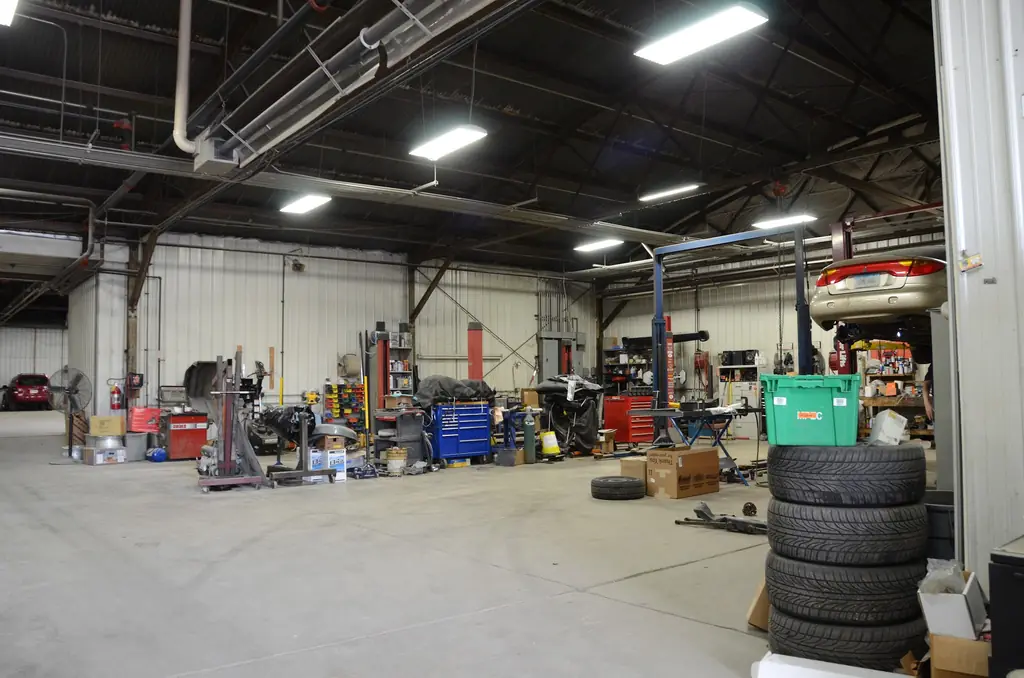
Main shop bay at Andrews Collision Center with a vehicle raised on the lift and tool chests lining the wall
How we actually straighten it
Before anything gets pulled, we put the car on our computerized laser measuring system. It reads the factory reference points built into the body and tells us, in numbers, exactly how far out of position the structure sits and in which direction. That's the difference between fixing a car and fixing this car, the one in front of us today, as it actually measured.
Once we know the numbers, the vehicle gets anchored down and worked on our unibody and frame straightening racks, which pull the structure back toward those factory points in a controlled, gradual way rather than forcing it in one go. We don't eyeball this and call it close enough. The car goes back on the laser system partway through and again at the end, so the last step is confirming the numbers match spec, not judging it by whether the doors seem to shut okay.
That re-measuring step is the part a lot of shops skip, because it takes time and the car already looks straight to the eye. We'd rather have the printout.
Chapter 03
Why we measure before we ever quote a panel
It's tempting to just hang a new fender or door on a car and call the collision handled, especially when the sheet metal on top looks like the only damage. If the structure underneath is still out of alignment, a new panel just gives you a fresh piece of metal sitting on a frame that's still bent. The symptoms come back: the pull, the uneven tires, the gap that won't stay even.
The structure isn't just there to hold the body together day to day. It's what's designed to manage the force of the next impact and keep the passenger cabin intact. Straightening it to spec, measured and verified rather than eyeballed, is the part of the repair you're actually paying for even when you can't see it once the panels go back on.
That's why we run the laser measurement first on every structural job that comes through our Cedar Rapids shop, before we tell you what the repair involves. Call (319) 365-4627 if your car has started pulling to one side or a gap has changed on you, and we'll put it on the rack and show you the numbers.
Andrews Collision Center, BBB accredited, ASE certified technicians, family owned since 1958. Structural repairs carry the same lifetime craftsmanship warranty as the rest of our bodywork.