What A Full Diagnostic Check Catches After A Fender Bender
A fender bender that seems minor can still push a control arm or a steering component out of spec without leaving a mark you'd notice by looking.
September 9, 2026 · 3 min read
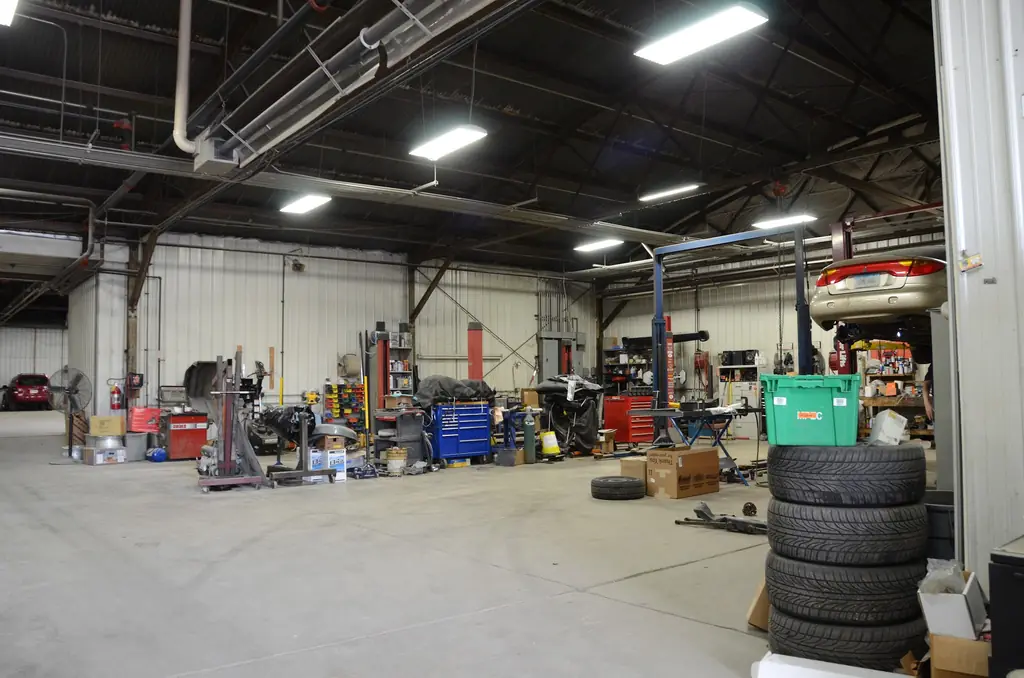
A fender bender that seems minor, a tap in a parking lot, a slide into a curb, often gets treated like a purely cosmetic problem: replace or repaint whatever cracked, and move on. But the body of a car isn't the only thing that takes the hit. At Andrews Collision Center, every vehicle that comes in for collision repair goes through a full diagnostic check alongside the bodywork, because the parts you can't see from the driveway are just as likely to have taken the impact as the ones you can.
What gets checked during a collision diagnostic, beyond the obvious bodywork
- Suspension components: control arms, tie rods, strut mounts
- Steering system alignment and connection points
- Battery terminals and connections, which can loosen in a hard jolt
- Warning lights or codes that appeared after the accident
Steering and suspension take more of a hit than people expect
A suspension system is built to absorb the shock of potholes and curbs within a narrow, designed range. A collision, even a small one, can push a control arm or a steering component past that range without bending anything you'd notice by looking. The car can still drive, still steer, still stop, right up until a control arm that's slightly bent starts wearing a tire unevenly, or a steering component that's slightly off makes the car pull to one side on the highway. That's why steering system diagnostics and suspension repair go through the same shop on the same visit, rather than getting treated as separate problems only if a customer happens to complain about them later.
Front-end alignment only means something after the structure is right
An alignment adjusts the angles of the wheels against a set of reference points on the car. If those reference points themselves shifted in the collision, a bent control arm, a mounting point that's slightly off, then an alignment done first is being measured against the wrong baseline, and it won't hold. That's why front-end alignment happens after suspension and steering components are inspected and, where needed, repaired or replaced, not before. Skipping that order is one of the more common reasons a car needs another alignment a few months after a repair that seemed to fix everything the first time.
Factory parts where fit and function actually matter
Some of what a diagnostic check turns up gets repaired. Some of it gets replaced outright, and when it does, we use factory replacement parts on the components where precision matters most, steering and suspension hardware, mounting points, the pieces that hold everything else in alignment. A part that's close enough to fit but isn't built to the same spec can hand the same alignment or wear problem right back to you, just more slowly the second time around.
Repair when it holds, replace when it doesn't
Not everything the diagnostic turns up needs a brand new part. A control arm or a mounting bracket that's bent but still structurally sound can often be repaired and brought back to spec rather than pulled and replaced, and that's usually the faster, less expensive path when it's genuinely an option. The judgment call is knowing which is which. A part that looks fine sitting on the lift but has already been stressed past its tolerance is exactly the kind of thing a full diagnostic is meant to catch before it goes back on the road, not after a customer feels something go wrong down the line. We tell you plainly which of your car's parts fall into each category rather than defaulting to whichever is easier or faster for us to do.
Ashley Fitzpatrick, one of our regular customers, put it simply: "Andrew's collision has fixed my car up a number of times and they always do a fantastic job, and they are so nice with getting you in when need to be." That's the standard a full diagnostic check is meant to protect. Getting the car looking right again is the easy half. The rest is making sure it drives the way it did before the accident happened, and keeps doing that months down the road. Andrews Collision Center has been doing this kind of work in Cedar Rapids since 1958, with ASE-certified technicians running the diagnostic on every repair that comes through the door. If your car has been in even a minor accident, it's worth having it checked properly rather than assuming the parts you can't see came through fine.
Andrews Collision Center, (319) 365-4627
Call (319) 365-4627More articles
Why We Measure Your Car Before We Quote The Repair
A bent frame rarely shows on the surface. Here's what our computerized laser measuring system is checking before a wrench ever touches a panel.
67 Years And Still Family-Owned: What That Actually Means When Your Car's In The Shop
A shop doesn't stay open in the same Cedar Rapids neighborhood for 67 years by accident. Here's what that reputation is actually built on.