Why We Measure Your Car Before We Quote The Repair
A bent frame rarely shows on the surface. Here's what our computerized laser measuring system is checking before a wrench ever touches a panel.
September 9, 2026 · 4 min read
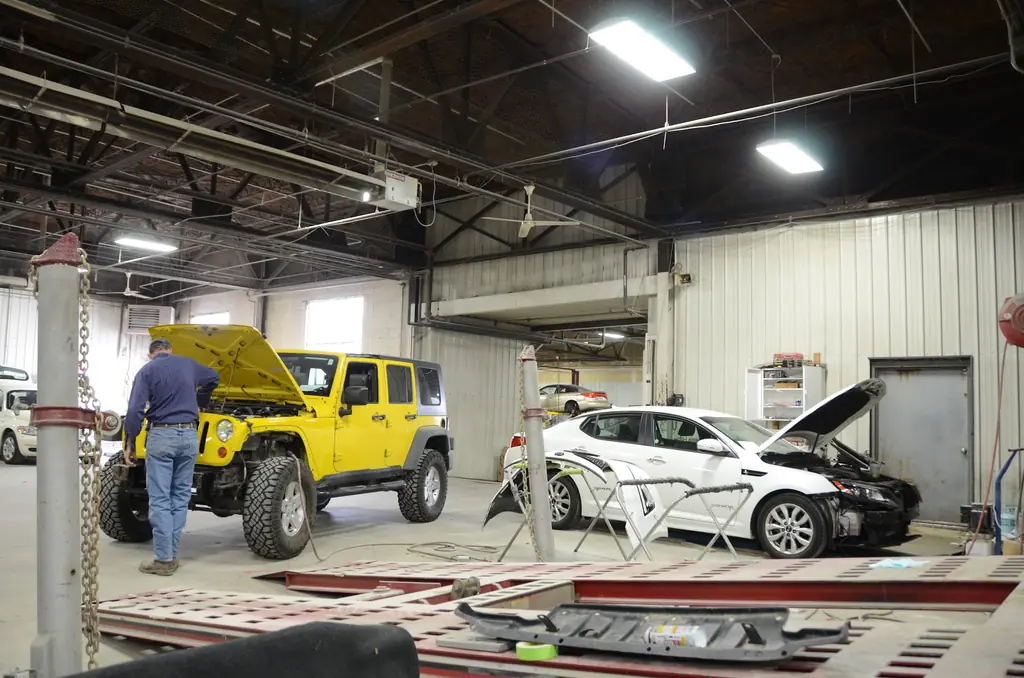
A fender that looks straight from the driveway can be hiding the real damage. That's the part of collision repair most drivers never see, and it's also the part that decides whether a repair actually holds. Before anyone at Andrews Collision Center writes an estimate on your car, we put it through a computerized laser measuring system first. Not because we like extra steps. Because a body panel is only as good as the structure underneath it, and eyes alone can't tell you if that structure is still square.
What the measuring system is actually looking for
Every vehicle, whether it's built on a separate frame or a unibody, comes from the factory with a set of exact reference points. Those points are how the manufacturer designed the car to sit, to crumple in a controlled way in a future collision, and to keep doors, hood and hatch lining up the way they were engineered to. A laser measuring system checks the car's actual points against those factory numbers, down to fractions of an inch. It isn't guessing whether something looks off. It's comparing what's really there to what should be there.
That matters because a collision rarely damages just the part you can see. A hit to the front corner can push force back through the frame rails or the unibody structure, even when the bumper cover and the headlight are the only things that look broken. The only way to know how far that force traveled is to measure it, not to eyeball it.
Why fixing the panel before fixing the structure just hides the problem
It's tempting to think of collision repair as replacing whatever's dented or cracked. But a new fender bolted onto a frame that's still out of alignment will look right for about as long as it takes for the truth to show up again. That's what our unibody and frame straightening racks are for. If the measuring system shows the structure has moved, that gets pulled back to factory spec on the rack first, verified with another measurement, and only then does bodywork and paint start. Skipping that order doesn't save the car any real time. It just moves the problem down the road.
Here's what that problem tends to look like once it shows up. None of it happens right away, which is exactly why it catches people off guard weeks or months after a repair that skipped this step:
- The car pulls slightly to one side, especially under braking or at highway speed
- Tires wear unevenly, often on just one corner of the car, because the suspension geometry is off
- Doors, the hood, or the hatch stop closing flush the way they used to
- A new wind noise or rattle shows up that was never there before the accident
Any one of those on its own might get written off as normal wear. Together, especially soon after a repair, they're usually a structure that was never actually brought back to spec.
This isn't just a body shop concern
A frame or unibody that's still slightly out of spec doesn't just affect how a car looks. Suspension components are bolted to specific points on that structure, and a front-end alignment is only as good as the points it's measured from. Get the structure close but not exact, and an alignment set afterward is effectively being measured against the wrong reference point from the start. That's why structural work and alignment go together rather than being treated as two unrelated jobs. Steering feel, braking stability and how evenly a car wears its tires all trace back to that same structure being true.
A story that makes the point better than we can
One of our customers, Alison Taylor, hit a curb and her car immediately started making a loud clanking noise. She took it to three separate mechanics first and paid over four thousand dollars across five months, and none of it actually fixed the problem. When she finally brought it to Andrews, the real issue was diagnosed and repaired for a $130 bill. That's the difference between guessing at a symptom and actually measuring what's wrong. We didn't get lucky. We looked at the right thing first.
Andrews Collision Center has been doing collision and frame work in Cedar Rapids since 1958, and the shop is still family owned today. Our ASE certified technicians run every structural repair through the same laser measuring process before any panel work starts, whether the damage is a minor parking lot tap or something a lot more serious. If your car has been in an accident and something about the way it drives or closes up doesn't feel quite right, that's worth having measured properly rather than guessed at. Give us a call and we'll walk you through what we find.
Andrews Collision Center, (319) 365-4627
Call (319) 365-4627More articles
What A Full Diagnostic Check Catches After A Fender Bender
A fender bender that seems minor can still push a control arm or a steering component out of spec without leaving a mark you'd notice by looking.
67 Years And Still Family-Owned: What That Actually Means When Your Car's In The Shop
A shop doesn't stay open in the same Cedar Rapids neighborhood for 67 years by accident. Here's what that reputation is actually built on.