Why New Paint Doesn't Always Match, And How We Prevent It
Factory paint codes are just a starting point. Sun and years of Iowa weather change what your car actually looks like right now.
September 9, 2026 · 4 min read
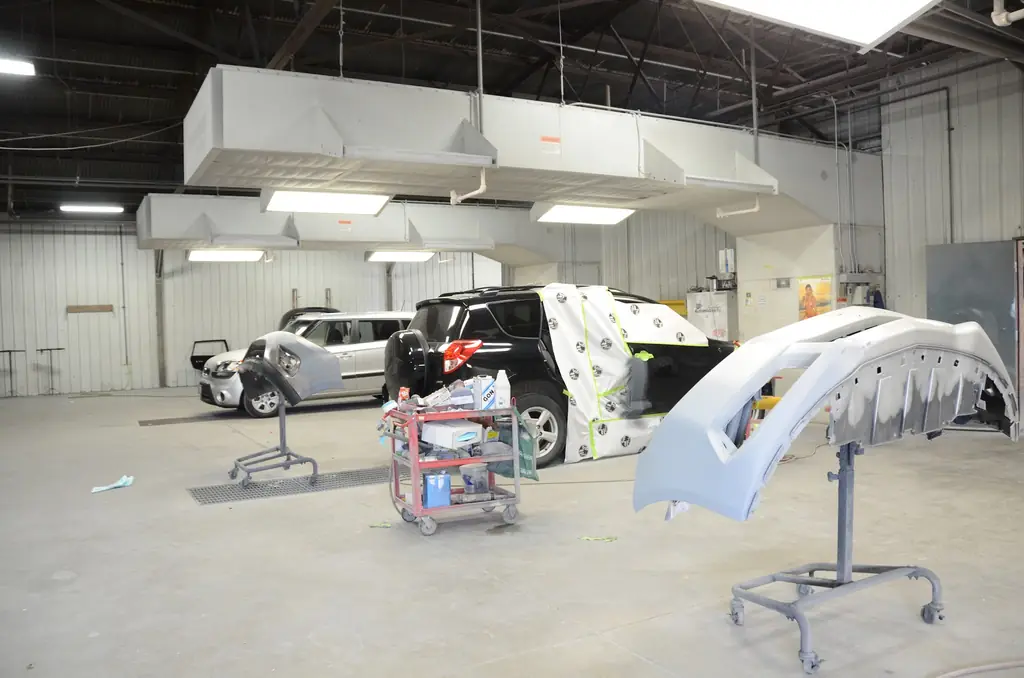
You've probably seen it on someone else's car before you ever worried about your own: a door or a fender that's just slightly off from the panel next to it. Not wildly different, just enough that your eye catches it in the parking lot. That's a paint match that went wrong, and it's one of the most common ways a collision repair gives itself away. At Andrews Collision Center we treat matching paint as its own discipline, not an afterthought to bodywork, because it's usually the difference between a repair nobody notices and one that follows the car around for years.
The paint code on the door jamb isn't the whole story
Every car leaves the factory with a paint code, and that code is a real, specific formula. The trouble is that the code describes the car on the day it was painted, not the car sitting in our lot today. Iowa sun does real work on a clear coat and a base coat over a few years. So does age, washing, and just being parked outside through a few winters. Two vehicles with the identical factory code, one five years old and one brand new, can look noticeably different side by side. So the code is where a match starts. It is never where it ends.
That's why we use computerized paint mixing rather than pulling a can off a shelf labeled with the factory formula. The system starts from that factory code, but our paint and color matching bench is where the real work happens: comparing the mixed color against the actual panels on your actual car, under real light, and adjusting until it reads true against what's already there rather than against what a spec sheet says it should be.
Why we blend into the next panel instead of stopping at a seam
Even a genuinely accurate match can look wrong if it stops at a hard edge. Paint has depth and it catches light differently depending on the angle you're looking from, and a seam where new paint meets old paint is exactly where a subtle difference becomes an obvious one. A shop that just paints the damaged panel and calls it done is betting that the human eye won't notice the boundary. Often it does. The better approach, and the one we use, is to blend the new color into the edge of the adjacent panel as well, so there's no hard line for your eye to land on. It costs more prep time. It's also the reason a repaired car can leave here looking like it was never hit rather than looking repaired.
What the booth is actually doing for the finish
The last piece is where the paint cures. Our downdraft paint booth pulls filtered air down and out of the space while the car is being sprayed, instead of letting dust and debris settle into wet paint the way an open garage bay would. Combined with baked on finishes, that's what gives a repaired panel the same depth and gloss as the factory paint sitting next to it, rather than a slightly flatter or slightly different-textured patch that a trained eye, or just a picky owner, would spot in the sun.
Prep matters just as much as the spray gun itself. Before a panel ever gets near the booth, it moves through our Team Blowtherm UltraPrep prep station, where the surface gets cleaned, sanded and readied so the new paint has an even, contaminant-free base to bond to. Rush that stage and it shows up later as texture under the clear coat, no matter how good the color match is. Slow it down and do it right, and the color match gets to do its job on a surface that's actually ready for it.
What this looks like from the driver's seat
You don't need to know any of this to notice when it's missing. A car with a rushed paint match usually gives itself away in direct sunlight, or at an angle in a parking lot, long before anyone points it out. A car matched properly just looks like a car that was never hit. That's the actual goal every time, not just getting the color close enough to pass a quick glance in the shop's own lighting.
None of these steps are optional at Andrews. Our Axalta certified refinishers run the color matching bench and the booth together as one process, because a repair that's structurally perfect but visually off still tells everyone who looks at it that something happened to this car. Andrews Collision Center has been doing body and paint work in Cedar Rapids since 1958, and we back the craftsmanship on the bodywork with a lifetime warranty. If a panel on your car needs to disappear back into the rest of it, that's the job we're set up to do.
Andrews Collision Center, (319) 365-4627
Call (319) 365-4627More articles
Why We Measure Your Car Before We Quote The Repair
A bent frame rarely shows on the surface. Here's what our computerized laser measuring system is checking before a wrench ever touches a panel.
What A Full Diagnostic Check Catches After A Fender Bender
A fender bender that seems minor can still push a control arm or a steering component out of spec without leaving a mark you'd notice by looking.